Steller Evolution
The life of a star amongst thousands of starts

We have all experienced the night sky: the oh-so-familiar picture that is ever-changing. Yet, many do not comprehend what this vast firmament holds and what is beyond it. When people hear the word star, the first thing that springs to mind is our Sun: the sole reason we can exist on this planet. However, the evolution of stars, like our Sun, is arcane to most.
The Birth of a Star
The journey of a star begins with an enormous cloud of gas and dust (REALLY huge), known as a nebula; this cloud is composed mainly of hydrogen and helium. Then, gravity pulls the particles in this cloud together, forming clumps that grow denser over time. As the density increases, the temperature rises, giving birth to a protostar—a hot, condensed nebula region. Once the temperature in the core reaches about 10 million Kelvin, nuclear fusion ignites; this marks the transition from a protostar to a main sequence star (just a fancy term for saying the standard kind): when hydrogen atoms fuse into helium, releasing vast amounts of energy.
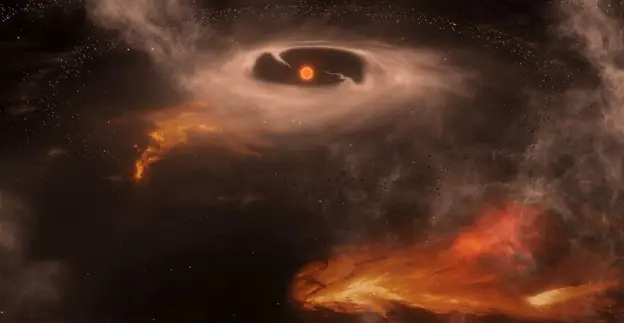
(Protostar in a Nebula)
Brown Dwarfs
However, not all protostars reach the necessary mass to undergo nuclear fusion; this happens when the protostar cannot engender the core temperature required for hydrogen fusion. Instead, it becomes a brown dwarf—an intermediate object between a giant planet and a star. Brown dwarfs emit faint infrared radiation but never shine like true stars; to the naked eye, they appear in different colors depending on their temperature. The warmest ones are conceivably orange or red, while cooler brown dwarfs would appear magenta or black.
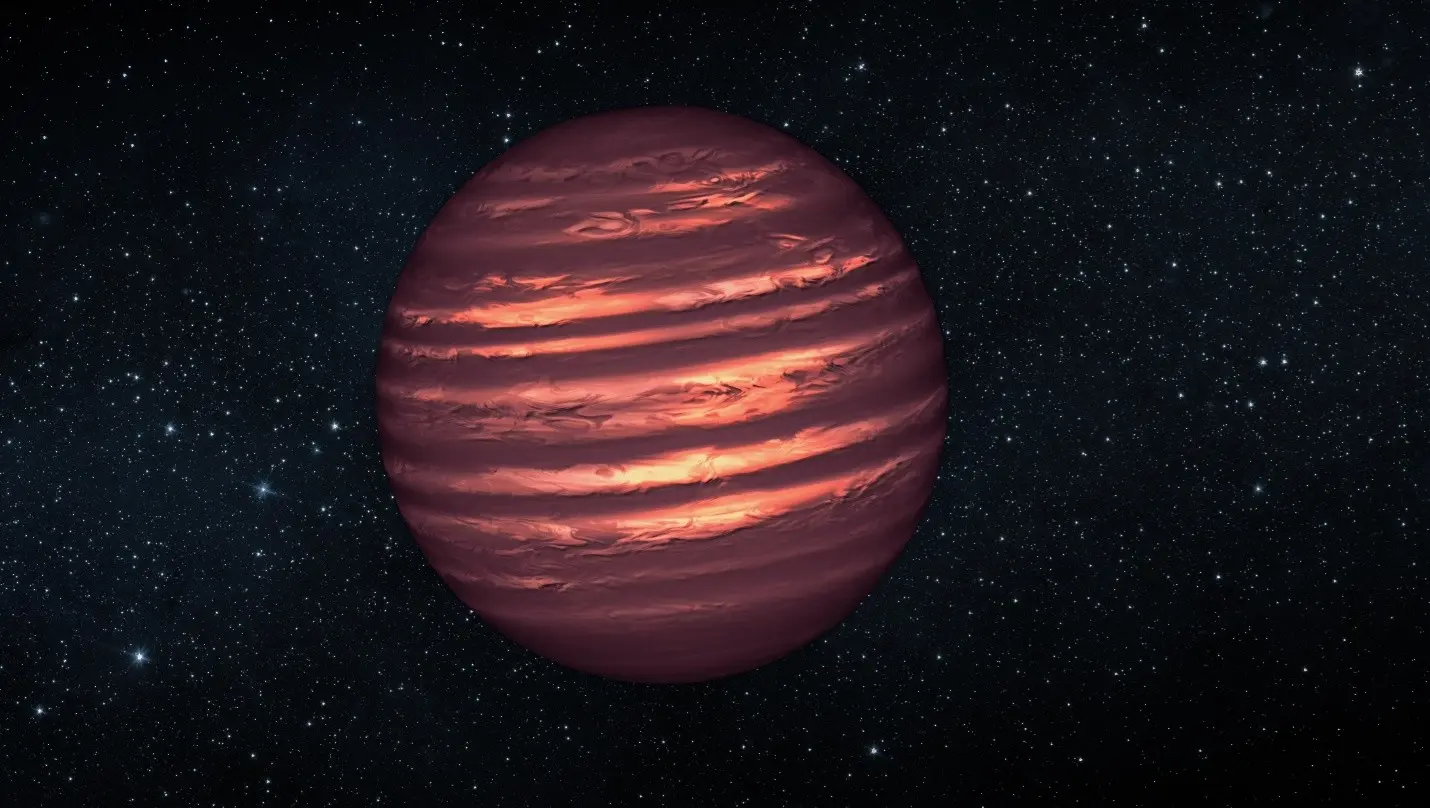
(Brown Dwarf)
The Main Sequence Phase
Once nuclear fusion plateaus, the star enters the main sequence—the longest stage of its life: the stage our Sun is currently in. This stable equilibrium is due to the outward radiation pressure from fusion balancing the inward gravitational forces. The course of the star’s life in this phase depends on its mass (Do you get it? Course? Mass?):
· Low-mass stars, like red dwarfs, burn their fuel slowly and can shine for trillions of years.
· Medium-mass stars, like our Sun, remain stable for billions of years.
· High-mass stars consume their fuel quickly and exist for only millions of years.
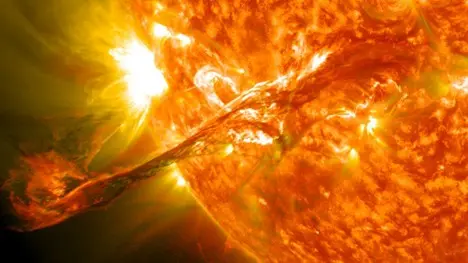
(The Sun)
The Red Giant and Supergiant Phases
The main sequence phase ends when hydrogen in the core is exhausted; the core contracts under gravity while the outer layers expand. The result is either a red giant (for low- to medium-mass stars) or a red supergiant (for high-mass stars). Then, helium fusion begins; it forms heavier elements like carbon and oxygen.
Medium-sized stars, like our Sun, have a relatively gentle process, leading to a red giant phase that lasts a few million years. However, in massive stars, fusion continues with heavier elements, producing neon, silicon, and eventually iron—the limit of nuclear fusion in stellar cores.
The Death of a Star
The final destiny of a star depends on its initial mass:
Low to Medium-Mass Stars:
Stars like our Sun eventually shed their outer layers; this creates a beautiful, glowing planetary nebula (better than any sunset). The remaining core is called a white dwarf—a dense, Earth-sized remnant that no longer undergoes fusion. Over billions of years, white dwarfs cool and fade into black dwarfs; due to the universe’s age, none have reached this stage yet.
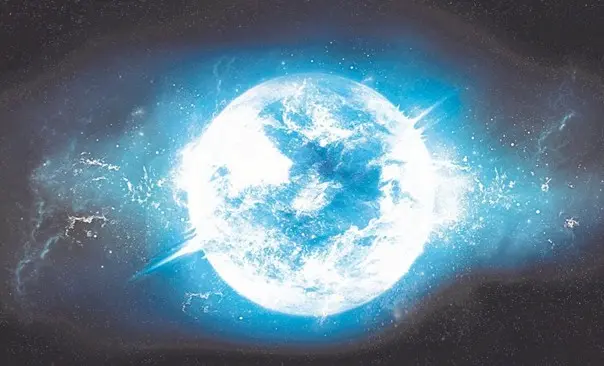
(White Dwarf)
Massive Stars:
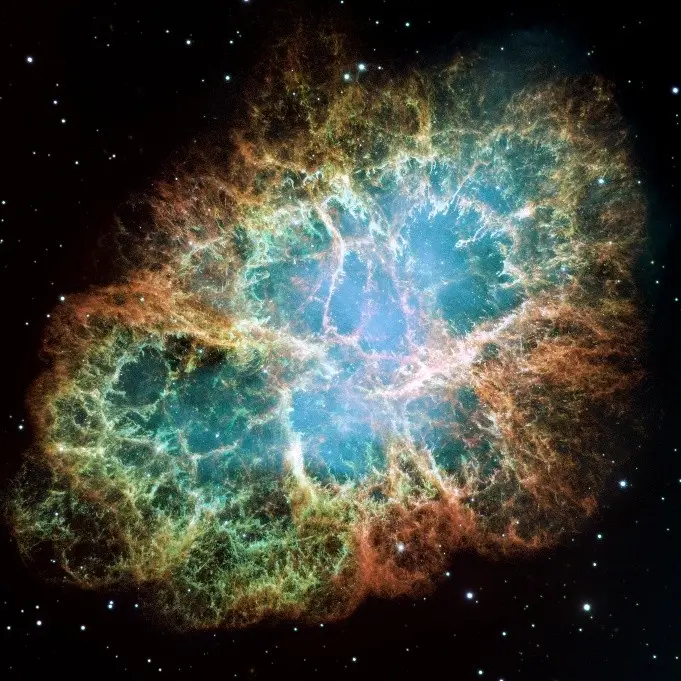
Stars, at least eight times more massive than the Sun, have a much more violent process. Once iron forms in the core, fusion stops, and the core collapses under its immense gravity. Subsequently, It triggers a Supernova, one of the most energetic events in the universe.
The aftermath depends on the remaining core mass:
· If the core is 1.4 to 3 times the mass of the Sun, it becomes a neutron star—an ultra-dense, rapidly spinning object composed almost entirely of neutrons.
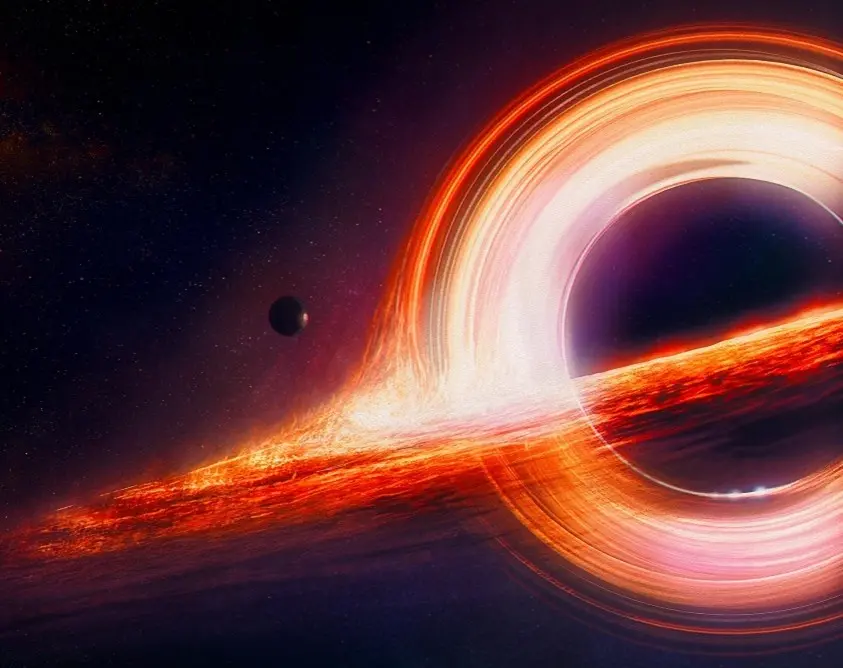
· If the core is heavier than three solar masses, gravity overwhelms all resistance; the infamous black hole will form, where not even light can escape its gravitational pull.
|
|
(Supernova) | (Black Hole) |
Stellar evolution is more than just the life cycle of stars—it is the process that creates the elements necessary for life. Every atom in our bodies, from the carbon in our cells to the iron in our blood, was forged in the heart of a dying star billions of years ago. So, it is crucial to understand it to grasp how we got to this point.
It is a fascinating world; we can witness so much yet so little. The beautiful discovery of stellar evolution will continue to be a token of the unknown outside our comfortable planet. And someday, with the support of our knowledge, humanity will uncover more mysteries.
Sources:
https://en.wikipedia.org/wiki/Stellar_evolution
https://www.britannica.com/science/star-astronomy/Star-formation-and-evolution
https://byjus.com/physics/life-cycle-of-stars/